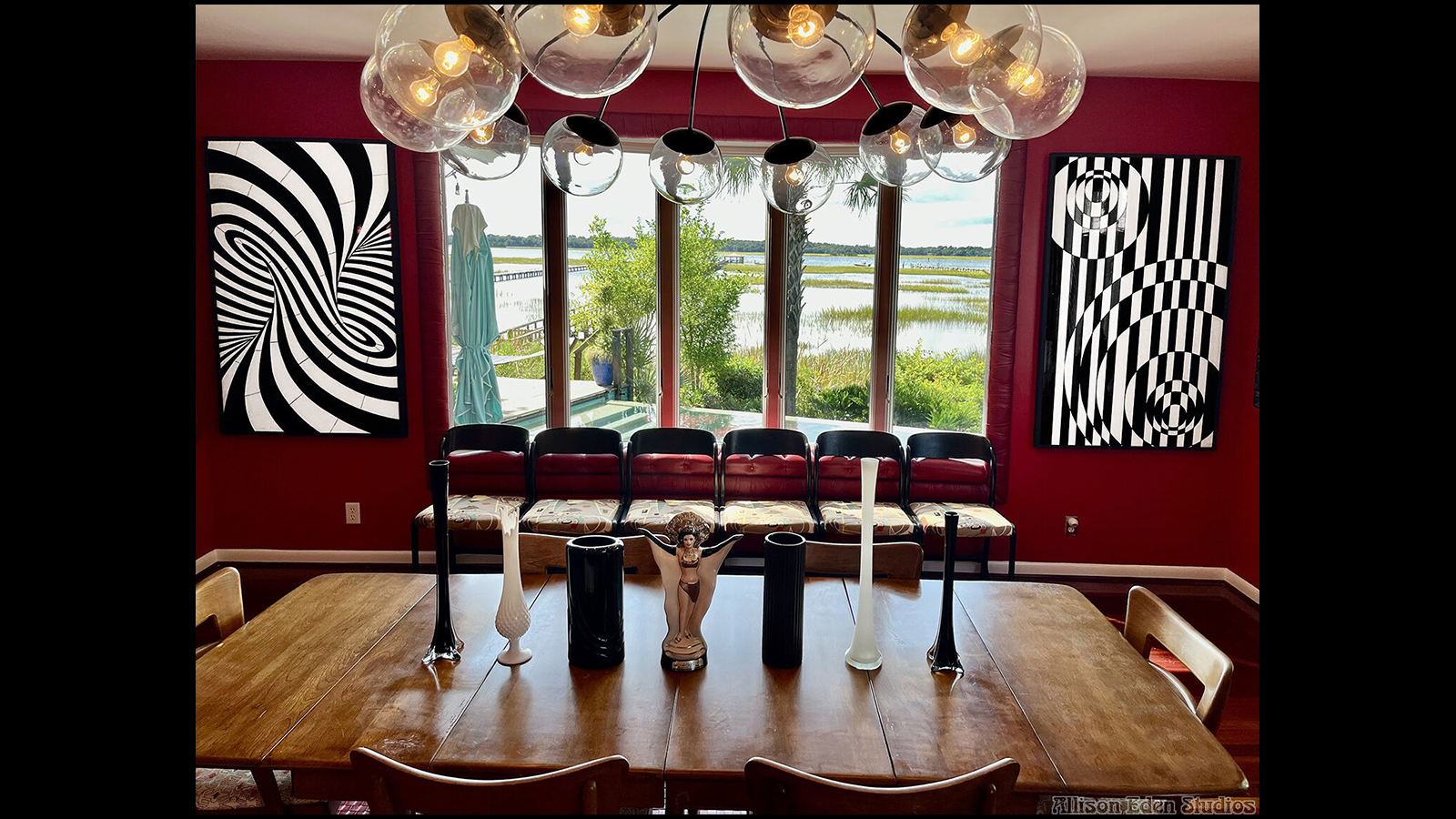

Charleston, SC
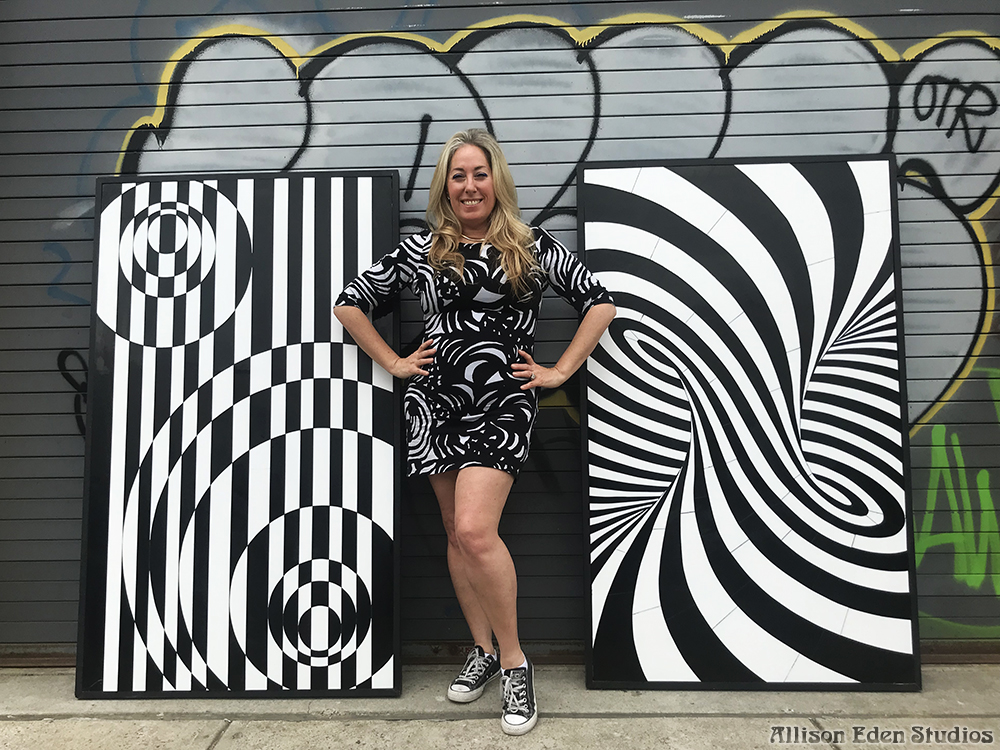
Bold, graphic and impossible to ignore, this series of black-and-white optical illusion glass mosaics by Allison Eden explores movement, perception and rhythm through one of the artist’s favorite materials: glass.
Created as original works of contemporary mosaic art, the pieces use precisely arranged fields of black and white to produce a sense of motion that changes as the viewer moves around them. Curves appear to bend. Circles seem to pulse. Straight lines distort into waves.
The effect is immediate, but the craftsmanship behind it is anything but simple.
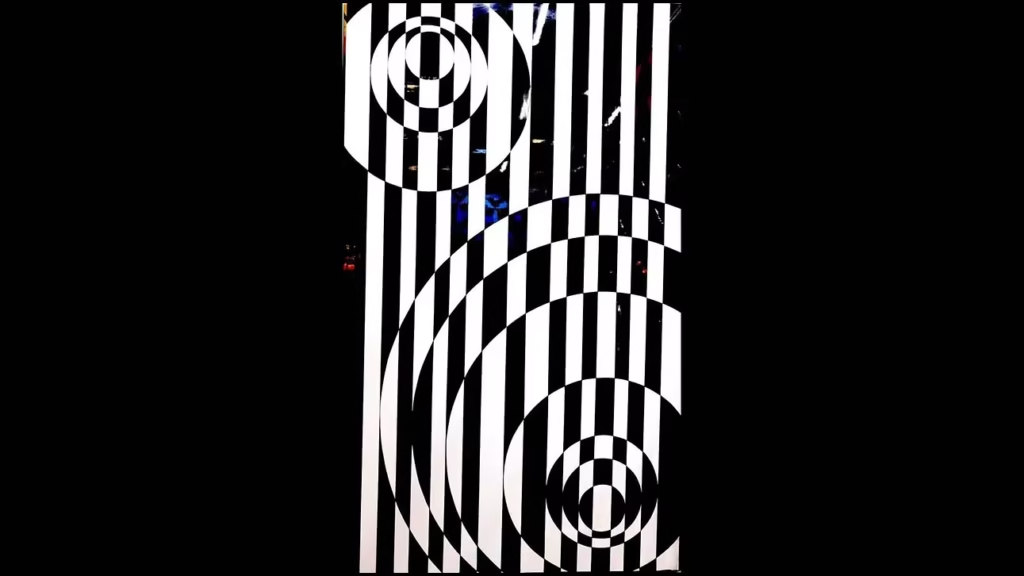
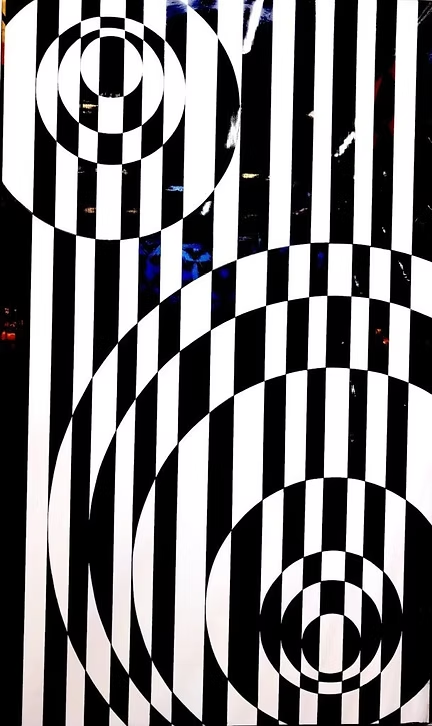
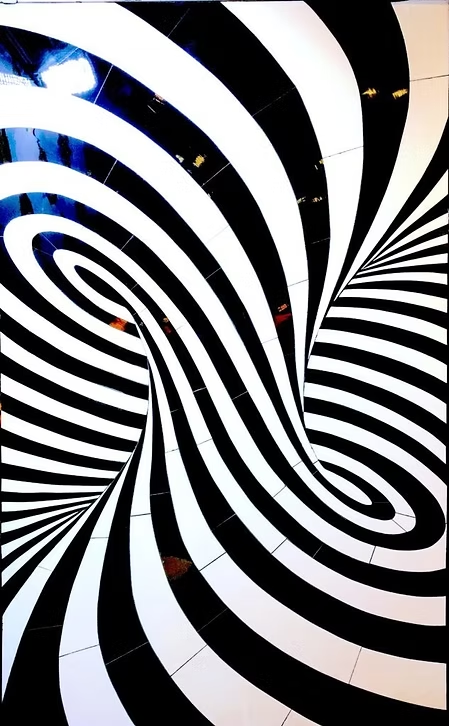
Each mosaic required weeks of painstaking studio work, from developing the composition and mapping the geometry to cutting, fitting and refining the individual glass pieces by hand.
The finished artworks eventually found a happy home with a collector in Charleston, South Carolina, bringing Allison Eden’s unmistakable Brooklyn energy to a new setting.
Where Op Art Meets Glass
The compositions draw from the visual language associated with Op Art and mid-century optical abstraction, but Allison Eden translates that tradition into a material with its own unique personality.
Glass changes everything.
Its reflectivity introduces another layer of movement. Light travels across the surface. Glossy black areas deepen depending on the viewing angle, while white glass catches illumination differently throughout the day.
The result is not static.
Even though the palette is limited to black and white, the artworks remain visually active because the glass itself responds to light and position.
That interaction makes mosaic particularly well suited to optical art.
Master Craftsmanship in Every Curve
Black-and-white artwork can be unforgiving.
When color is removed, proportion and craftsmanship become even more important.
Every curve must flow correctly.
Every line must align.
Every transition between black and white must contribute to the larger visual illusion.
A small error can interrupt the rhythm of the entire composition.
This is where Allison Eden Studios’ decades of mosaic expertise become especially important.
Each section was fabricated by hand in the Brooklyn studio by artists accustomed to working with glass as both a decorative and fine-art medium. Individual pieces were carefully cut and shaped so that the geometry remains fluid while still retaining the subtle irregularity and character of handmade mosaic.
The craftsmanship is visible when viewed up close.
From a distance, however, the individual pieces disappear and the eye sees only the larger illusion.
That dual experience is part of what makes the artwork compelling.
From Graphic Design to Collectible Art
These works demonstrate how mosaic can move beyond traditional architectural applications and function as stand-alone contemporary artwork.
Mounted as independent panels, the pieces can live much like paintings or sculpture.
But unlike printed imagery, the surface has physical depth and reflectivity.
The viewer sees the composition.
Then the glass.
Then the hand craftsmanship.
That layering of experiences gives each piece a presence that changes depending on distance and light.
For collectors of modern art, Pop Art and contemporary glass, this combination of graphic immediacy and handmade materiality creates a distinctive point of view.
A Limited Palette With Maximum Impact
One of the most striking aspects of the series is its restraint.
There is no color competing for attention.
Everything depends upon black, white, scale and movement.
The simplicity of the palette makes the optical effects stronger while giving the pieces a timeless quality.
They can work in highly contemporary interiors, eclectic collections, monochromatic spaces or rooms filled with color.
The artwork does not need to match its surroundings.
It creates its own visual environment.
The Allison Eden Approach
Allison Eden’s work often celebrates vibrant color, stained glass and exuberant pattern.
This series reveals another side of that vocabulary.
By stripping the palette down to black and white, the emphasis shifts toward composition, geometry and visual movement.
Yet the work remains unmistakably connected to Allison Eden’s broader practice through the use of glass, hand fabrication and bold graphic energy.
Each piece begins with an idea.
Then comes the labor.
Cutting.
Fitting.
Adjusting.
Reworking.
Refining.
Weeks later, thousands of individual decisions become one unified artwork.
That process is central to Allison Eden’s work as a mosaic artist.
From Brooklyn to Charleston
After weeks of fabrication in Allison Eden Studios’ Brooklyn workshop, these black-and-white optical mosaics found their home in Charleston, South Carolina.
For an artist, there is something especially rewarding about seeing a work leave the studio and begin a new life with a collector.
The artwork becomes part of another interior, another collection and another story.
Yet every piece carries the evidence of where it began:
handcrafted in Brooklyn, one piece of glass at a time.
Who creates black-and-white optical illusion mosaics?
Allison Eden creates contemporary black-and-white optical illusion mosaics using hand-cut glass in her Brooklyn studio. Her work combines elements of Op Art, graphic abstraction and traditional mosaic craftsmanship.
Is Allison Eden’s mosaic work considered fine art?
Allison Eden creates both architectural mosaic commissions and independent glass artworks intended for collectors, galleries and contemporary interiors.
How are Allison Eden’s glass mosaics made?
The works are handcrafted from individually selected and cut pieces of glass. Complex compositions can require weeks of cutting, fitting, assembling and refinement in the studio.
What type of art inspires these black-and-white mosaics?
The series relates visually to Op Art, geometric abstraction and Pop-influenced graphic design, while remaining rooted in Allison Eden’s distinct approach to glass mosaic.
Can Allison Eden create commissioned mosaic artwork?
Yes. Allison Eden Studios creates custom mosaic artwork for private collectors, designers, residential interiors, hospitality projects and architectural spaces.